Two contractors visit your terrace. One quotes a low price for a "roof coating." The other quotes a higher price for "terrace waterproofing." Both say their work will stop the leak.
So which one is right? The answer depends on what your terrace actually needs. This guide explains the difference between roof coating and terrace waterproofing, when each makes sense, and how to avoid paying for the wrong one.
Quick Answer: Roof Coating vs Terrace Waterproofing
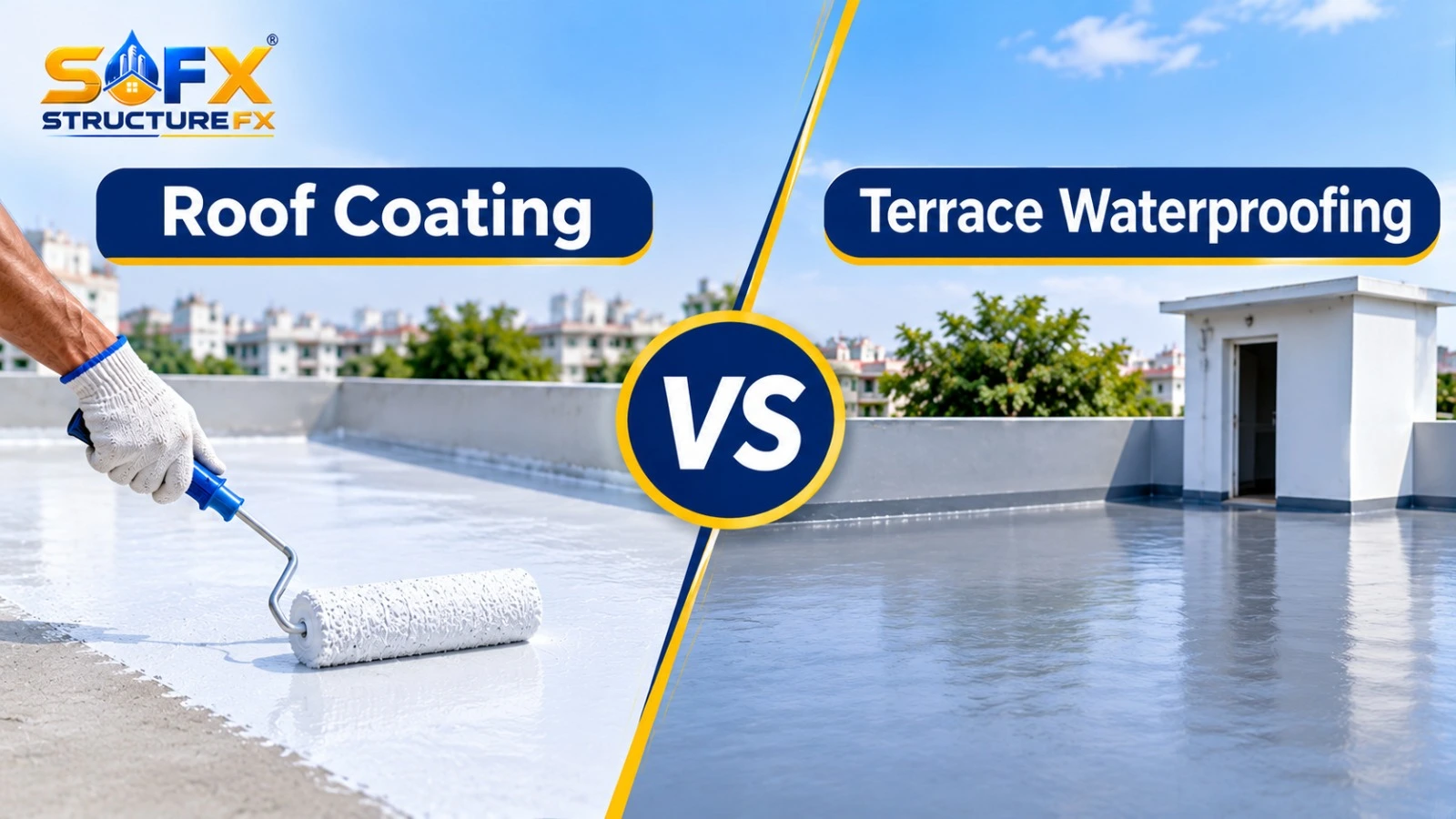
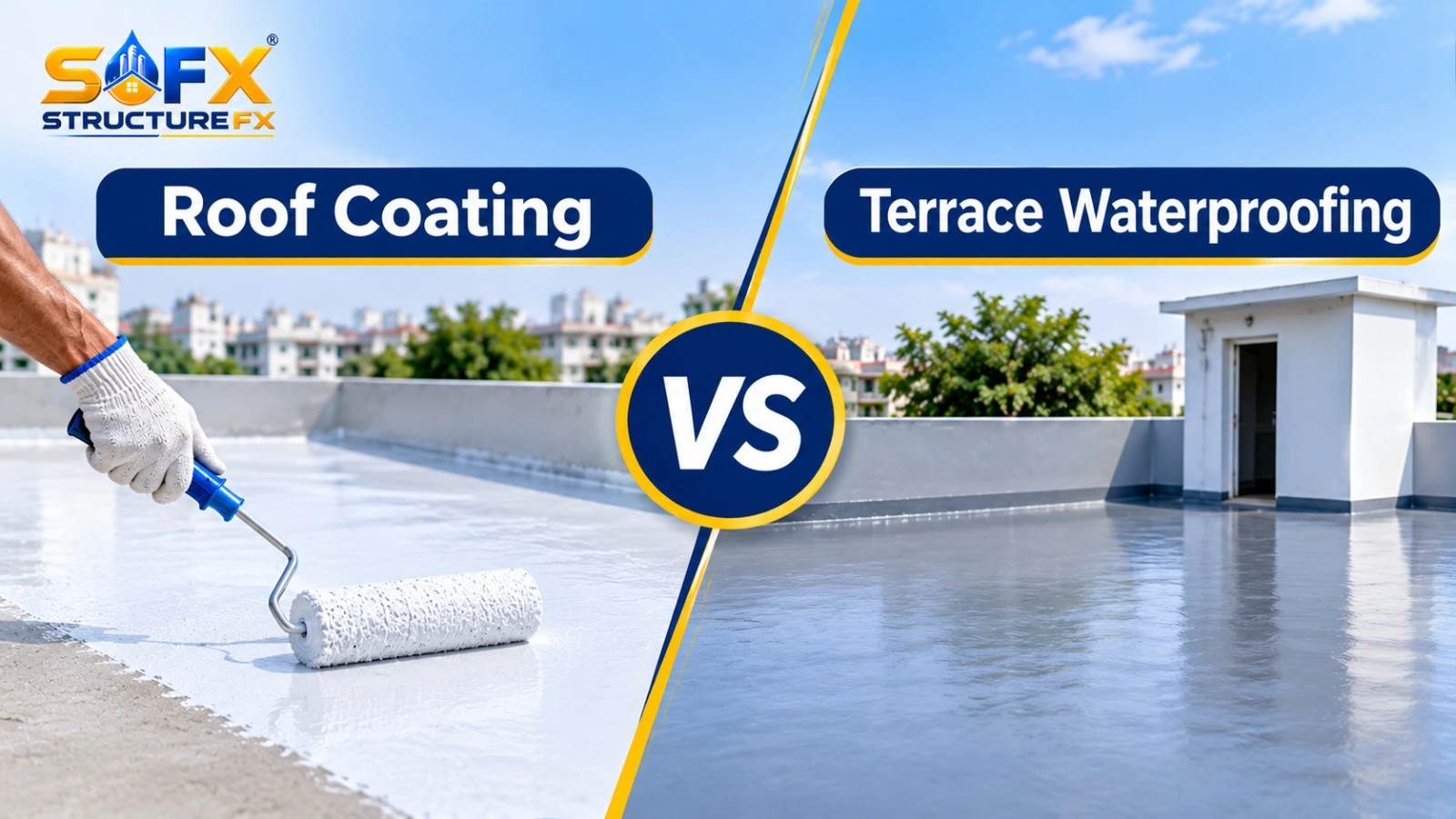
A roof coating is a thin protective layer applied on top of the terrace surface. It protects against sun, light moisture and wear, and some types reflect heat.
Terrace waterproofing is a complete system. It includes repairing the surface, treating cracks and joints, applying a proper waterproofing layer in several steps, and testing the result.
What Is a Roof Coating?
A roof coating is a liquid that is rolled or brushed onto the roof and dries into a thin protective film. It is mostly used to:
- Protect the surface from sun, heat and weathering
- Reflect sunlight and reduce the heat the roof absorbs
- Give light protection against moisture on terraces in good condition
- Refresh an older, still-sound waterproofing layer
Common types include acrylic coatings, heat-reflective coatings and bitumen-based coatings. Some of these can handle light seepage on a healthy surface, but they are not designed to fix a roof that is already cracked or leaking.
What Is Terrace Waterproofing?
Terrace waterproofing is a planned process built to keep water out of the slab for years. It deals with the terrace as a whole, including the weak spots where leaks usually begin.
A proper job usually includes:
- Cleaning and preparing the surface
- Repairing cracks, holes and damaged areas
- Treating corners, parapet joints, pipe outlets and drains
- Applying primer and the waterproofing layer in the right number of coats
- Curing time
- A water-ponding test (also called a flood test) to confirm there is no leak
The waterproofing layer itself can be a liquid membrane, a polyurethane system, or a sheet membrane such as APP or SBS.
Roof Coating vs Terrace Waterproofing: The Key Differences
Purpose
A coating mainly protects and maintains a roof. Waterproofing is meant to solve and prevent leaks.
Scope of Work
A coating is one step, usually a clean-up followed by one or two coats. Waterproofing is a full process, from diagnosis to testing.
Surface Preparation
Coatings need a clean, sound surface. Waterproofing includes repair work first, such as opening and filling cracks, fixing the slope and rebuilding damaged areas.
Crack and Joint Treatment
Thin coatings can bridge hairline cracks at best. Waterproofing treats cracks, wall-to-floor joints and pipe points individually, because that is where most leaks start.
Thickness and Durability
Coatings are thin and wear out sooner, especially on terraces with heavy sun and rain. Waterproofing systems are built in thicker layers and are designed to last longer.
Flexibility
Terraces expand and contract with heat and cold. A good waterproofing system is built to stretch with that movement. A basic coating may crack once the surface moves.
Testing
A proper waterproofing job ends with a flood test. A coating job rarely includes one.
Warranty
Waterproofing contractors usually give a longer written warranty. Coatings often carry a shorter one, or none. Always ask what is covered.
Cost
A coating costs less upfront. Waterproofing costs more because the work covers more. The real comparison is the cost per year of protection, since a coating that fails early has to be redone.
Not Sure Which One Your Terrace Needs?
Let us check your terrace and tell you honestly whether it needs a coating or full waterproofing. Book a free site inspection with Structure Fx Waterproofing, Panchkula.
Is a Roof Coating the Same as Waterproofing?
Not exactly, though the two overlap. Some coatings are marketed as waterproof coatings, and when applied to a healthy surface they do resist water.
The key question is whether the coating is part of a complete system. A coating on a sound, well-prepared terrace can work well. The same coating on a cracked, leaking terrace is only a cover. Water will find a way through, and the coating will peel or blister.
When Is a Roof Coating Enough?
A coating may be the right choice when:
- The terrace is fairly new and has no leaks or visible cracks
- The existing waterproofing is still in good condition and you want to refresh or protect it
- Your main goal is to reduce heat with a reflective coating
- You are doing routine maintenance before the monsoon
- The surface is clean, dry and sound
Even then, a short inspection first helps confirm that the terrace is healthy.
When Do You Need Full Terrace Waterproofing?
Choose waterproofing when you see any of these signs:
- Damp patches or stains on the ceiling below
- Water pooling on the terrace after rain
- Cracks in the terrace surface or along the parapet walls
- Peeling or flaking of the old coating
- Leaks that keep returning after repairs or repainting
- An old terrace that has never been waterproofed properly
If any of these sound familiar, read the signs your terrace needs waterproofing before the monsoon.
Can You Apply a Roof Coating Over an Old Leaking Terrace?
You can, but it will not last. A coating applied over cracks, damp patches or a failing old layer cannot fix what is underneath. Water gets trapped, the coating blisters and peels, and the leak returns, often within a season.
Fixing the surface first is what makes any coating or membrane work. That is why a good contractor inspects the terrace before suggesting either option.
Types of Terrace Waterproofing Systems
If your terrace needs real waterproofing, these are the common systems:
- Liquid membrane: a flexible coating applied in layers, popular for home terraces
- Polyurethane (PU) system: a highly flexible layer suited to terraces with movement
- APP or SBS sheet membrane: torch-on sheets used on large flat roofs and commercial buildings
- Crystalline treatment: better suited for below-ground and water-holding concrete than for exposed terraces, as explained in our guide to crystalline vs membrane waterproofing
The right system depends on the terrace condition, the movement in the slab and your budget.
Roof Coating vs Terrace Waterproofing Cost: What to Compare
A coating usually has the lower price tag, but the cost to compare is the cost over time. A cheaper coating that lasts a few years and needs redoing can end up costing more than a waterproofing system that lasts much longer.
Also compare what is included. Does the price cover crack repair, joint treatment, the number of coats and a flood test? For a detailed breakdown, see our guide to terrace waterproofing cost per sq ft.
How to Decide: 5 Questions to Ask Before Choosing
- Is the terrace leaking right now? If yes, a coating alone will not work.
- Are there cracks or pooled water? These need repair first.
- How old is the terrace and its last treatment? Old, never-treated terraces usually need waterproofing.
- What is the main goal? Leak protection points to waterproofing. Heat reduction on a healthy terrace may point to a coating.
- What does the written warranty cover? A longer, clearer warranty usually reflects a more complete job.
How Structure Fx Helps You Choose the Right Option
At Structure Fx Waterproofing, we do not push the more expensive option. If a protective coating is enough for your terrace, we will tell you. If the terrace needs full waterproofing, we will show you why.
Our process is simple:
- Free site inspection. We check the terrace surface, cracks, drainage and the condition of any old layer.
- Honest recommendation. We tell you whether you need a coating, full waterproofing, or repairs first.
- Clear written quote. It names the system, the steps and the materials.
- Warranty in writing and a water test after the work.
We use materials from trusted brands such as Dr. Fixit, Sika, Fosroc and Kryton, and have been protecting homes, offices and housing societies across Panchkula, Chandigarh, Mohali and Zirakpur and the Tricity since 2001.
FAQs: Roof Coating vs Terrace Waterproofing
What is the main difference between roof coating and terrace waterproofing?
A roof coating is a thin protective layer. Terrace waterproofing is a complete system that includes repairs, joint treatment, the waterproofing layer and testing.
Is roof coating enough to stop a leaking terrace?
Usually not. A coating cannot fix cracks or an old failing layer underneath. A leaking terrace needs repair and proper waterproofing first.
Does roof coating reduce heat?
Heat-reflective coatings can reduce the heat a roof absorbs. This is a separate benefit from waterproofing, and a coating chosen only for heat will not fix a leak.
Which lasts longer, roof coating or waterproofing?
Waterproofing systems are generally built to last longer. The actual life depends on the product, the preparation and the upkeep, so ask for the warranty in writing.
Can I do roof coating before the monsoon instead of waterproofing?
If the terrace is healthy and has no leaks or cracks, a coating before the monsoon can be a sensible maintenance step. If there are signs of damage, it needs waterproofing first.
Can I apply waterproofing over an old coating?
It depends on the condition. A well-bonded old layer can sometimes be reused, but a peeling or damp one must be removed first. An inspection will tell.
Which is cheaper, roof coating or waterproofing?
A coating costs less upfront. But if it fails early and has to be redone, waterproofing often gives better value over time.
Not Sure Which One Your Terrace Needs?
The right answer depends on your terrace, not on the label. Book a free site inspection with Structure Fx Waterproofing. Call +91-9517 756 631 or message us on WhatsApp, and we will check your terrace and recommend what it actually needs.

Structure Fx Team
Waterproofing experts in Panchkula since 2001, trusted by 128+ happy customers across the Tricity.